Technology is essential for a nonprofit organization’s operations, but simply adding more tools won't drive efficiency.
There is a tendency among nonprofit organizations of progressively building up a technology stack. Teams often rely on separate tools for grants, donor management, finance, and programs, making cross-departmental reporting difficult. While each point solution addresses an isolated need, a fragmented tech stack ultimately creates broader operational challenges.
A comprehensive nonprofit technology strategy enables a far more deliberate approach. Rather than choosing software on the fly, organizations can pinpoint core operational challenges, determine necessary system integrations, and define expected outcomes.
The goal isn't simply to use more technology, but to build an environment that minimizes administrative effort, improves visibility for decision-making, and frees up resources for mission execution.
How To Classify Nonprofit Technology
To build a nonprofit technology strategy, start by defining the technologies an organization currently uses.
There are different systems available for nonprofits, including the following:
- Constituent relationship management: systems used for tracking donors, supporters, partners and other types of connections.
- Grant management software: systems used for managing grants.
- Financial systems: accounting, budgeting, expense management, and financial reporting tools.
- Program management technology: systems designed to track service delivery, participant progress, outcomes, and program activities.
- Fundraising technology: donation platforms, fundraising tools, events systems, and digital fundraising platforms.
- Collaboration tools: email, file storage, project management, instant messaging, document management.
- Reporting and analytics: dashboards, business intelligence tools and other solutions used to generate insights from operations data.
Categorizing technologies in this manner simplifies the process of identifying overlaps and gaps within the existing technology stack.
Prioritization Of Major Issues
A good nonprofit technology strategy always starts with the most pressing problems, not with product features.
While comparing software features is tempting, it often leads organizations to invest in unnecessary capabilities while leaving core challenges unaddressed. Instead, leadership should begin by clearly defining their key operational issues.
For example, an organization might determine that its primary issue isn't fundraising technology, but rather the lack of a dedicated grant management system. This gap can lead to scattered spreadsheet data, difficulty for finance in verifying reporting requirements, limited visibility for program teams regarding outcome deadlines, and a lack of oversight into the overall grant funding process for leadership.
Some other common areas of concern include:
- Too much manual data entry
- Redundancy of information across systems
- Hard time compiling reports
- Missing deadlines
- Lack of visibility across departments
- Lack of access to historical information
- Dependency on specific employees knowing complicated spreadsheets
- Lack of integrations between systems
What The Strategy Should Look Like
The main purpose of a technology strategy is to serve as a guiding framework for technology purchases, implementation and workflow changes.
It should start with defining the current state of affairs, i.e. which systems are being used by an organization, what is the function of each of them, who uses what, what information is repeated in several systems, and where manual processes emerge because lack of integrations.
Based on that an organization is able to define its future state, which might be consolidation of systems, replacement of spreadsheets, optimization of integrations, standardization of data, improvements in reporting, and clarification of ownership across solutions.
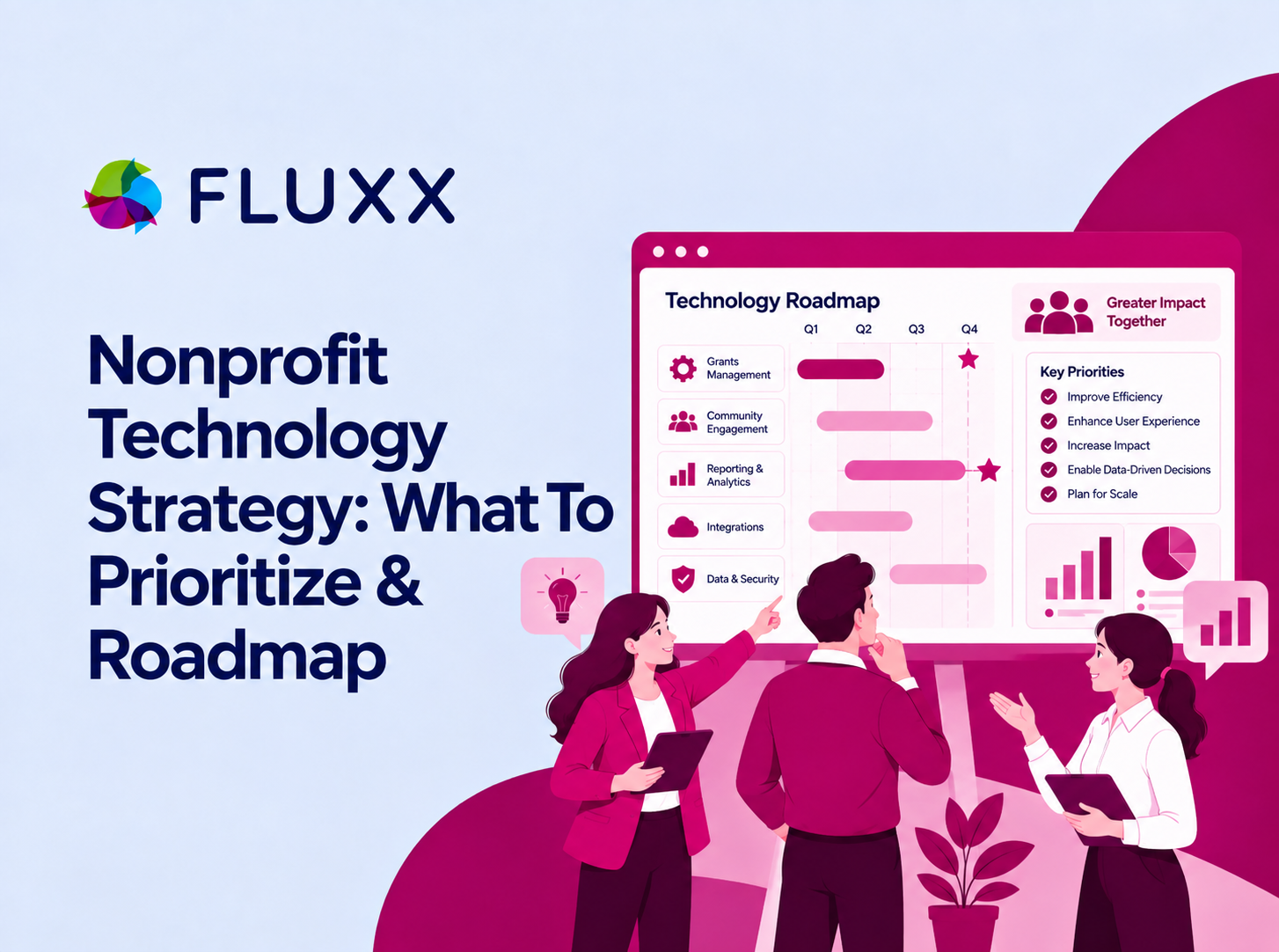
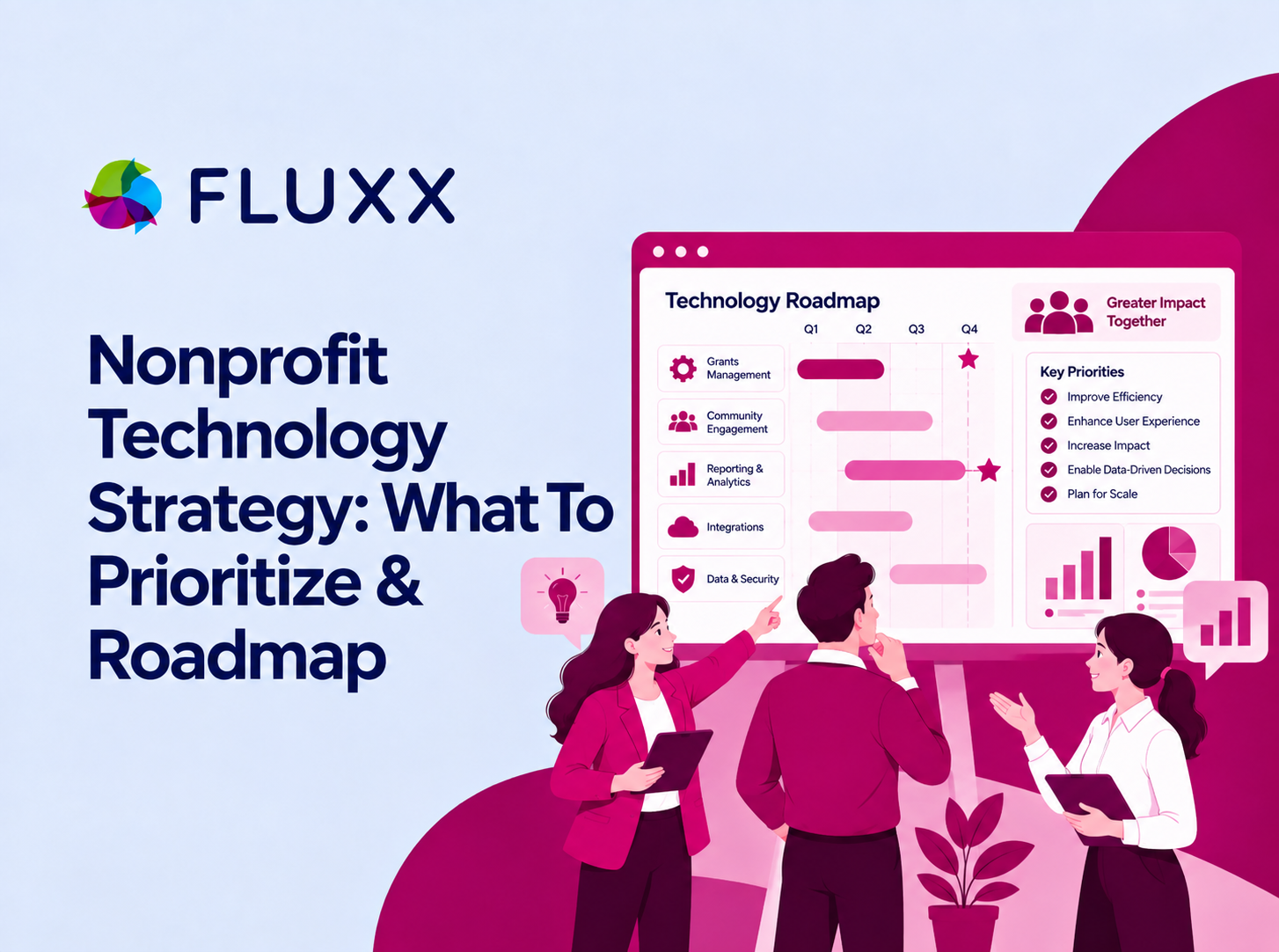
A good roadmap will contain the following elements:
- Operational issues that need to be solved
- Ranked technology priorities
- Which systems should be maintained, changed, replaced
- Which data needs to be transferred from one system to another
- Who will be responsible for implementation and further maintenance of new system
- Cost estimates
- Potential operational and financial benefits
- Realistic timeline of implementation
A roadmap does not need to mandate the immediate replacement of all systems. In many cases, it is more effective to address high-impact problems first and implement technological changes incrementally.
Use Data in System Evaluation
Data plays a key role in evaluation of the value of certain technology investments.
One should start by measuring the current process. How many hours does the team spend generating reports? How often data is entered into more than one system? How much time does it take for leadership to get accurate data regarding grant funding, donor activity, or program outcomes? How many grant applications, reporting deadlines, and follow-ups are managed manually?
These metrics are helpful to establish a baseline that will be later compared with results after the implementation.
Data can also be used in order to evaluate whether the given platform suits the needs of the organization. For example, in case of selecting a grant management software platform the following information is needed: number of active grants, number of funders, reporting volume, number of internal users, number of approvals steps, and the number of hours spent on manual management of the process.
Without this information selection of software becomes purely subjective. But with these metrics at hand the nonprofit will be able to decide whether the platform will be able to reduce work efforts, improve reporting, or support growth in measurable ways.
Who Benefits From Implementation?
A nonprofit technology strategy is not limited to the IT or Operations departments. Well-planned technology decisions positively impact every area of the organization.
- Development and grants teams will benefit from increased visibility on opportunities, deadlines, funders, awards, and reporting requirements.
- Program teams will benefit from reduced time spent searching for information, and will have clearly defined expectations on outcome reporting and grants.
- Finance teams will benefit from consistent information in relation to grants, budget, payments and reporting while reducing reconciliation between systems.
- Leadership will receive executive level insights for forecasting, strategy, board reporting, and resource allocation.
- Board members will benefit from better information on organizational performance, funding, risks, and impact.
- Funders and partners will benefit from improved communication, reliability of reporting and better organizational processes.
The most significant value is achieved when technology solutions cross-functionally benefit multiple teams across the organization.
Cost vs. ROI
When evaluating the cost of nonprofit technology solutions, subscription fees represent only a fraction of the total investment.
The true cost of nonprofit technology solutions involves implementation, data migration, configuration, training, integration, further maintenance, as well as employee work time to run the system. At the same time the cost of maintaining an inefficient process should also be taken into account.
Consider an organization where staff members spend hours each week manually reconciling data, searching for grant documents, and tracking deadlines. While relying on spreadsheets may appear cost-free, it carries substantial hidden labor costs.
Potential ROI might be calculated based on:
- Reduced staff time spent on administration
- Less duplicated processes
- Faster reporting
- Less missed funding opportunities
- Improved compliance
- Less reliance on consultants
- Increased usage of staff capacity
- More effective decision making based on better data
A system with a higher upfront cost can ultimately deliver superior ROI if it significantly reduces administrative overhead and mitigates operational risks.
What Makes Fluxx ROI Positive
Fluxx can deliver positive ROI by allowing the organization to consolidate the grant management process.
If grant information is dispersed across spreadsheets, inboxes, calendars, folders and financial systems, then employees spend a lot of time just aligning all these things. Fluxx helps to organize all this into one place, thus providing more consistent grants management.
Fluxx can help nonprofits to:
- Reduce manual administration: replacing repetitive spreadsheet updates, status checking and follow-ups with workflows.
- Improve reporting efficiency with Fluxx AI: allowing teams to have access to consistent information without building reports from multiple sources.
- Increase staff capacity: allowing existing employees to manage grants portfolio more effectively without growing administrative effort in the same way.
- Reduce reporting and compliance risk: keeping requirements, documents, deadlines, and historical activity easily accessible.
- Increase visibility with Grantelligence: providing better information for development, program, finance and leadership teams.
- Preserve institutional knowledge: maintaining grant histories and core processes seamlessly during staffing transitions.
The point is not just that the system will replace a spreadsheet. The point is that the organization will be able to run its grants management process more efficiently, reduce hidden administrative costs, and create a more solid basis for growth.
Nonprofit Technology Strategy To Support Growth
Effective nonprofit technology strategy should be making the organization easier to run, not more complex.
It starts with identifying the current technology stack, problems that are creating friction, and creating a roadmap based on these systems and data. Moreover, the strategy should include analysis not only of the subscription prices but also estimation of staff time, administrative effort, reporting work and potential operational risks related to every technology choice.
The most effective strategies focus on organizational priorities: development teams need better visibility into funding, program teams need access to consistent information, finance needs reliable data, and leadership needs better reporting to make efficient, confident decisions.
Grant management software can become an integral part of this strategy when grants are a source of funding for the organization. By replacing fragmented processes with a consolidated solution, nonprofits can build a technology foundation for efficiency and growth.
Schedule a demo with Fluxx to see how grant management software can become an integral part of a nonprofit technology strategy.